
Flamenco is an art form traditionally represented as a dance/music event based on the various folkloric music traditions of southern Spain, that originated in the region of Andalusia,

In a wider sense, the term is used to refer to a variety of both contemporary and traditional musical styles typical of southern Spain. Flamenco is closely associated to the gitanos of the Romani ethnicity who have contributed significantly to its origination and professionalization. However, its style is uniquely Andalusian and flamenco artists have historically included Spaniards of both gitano and non-gitano heritage.

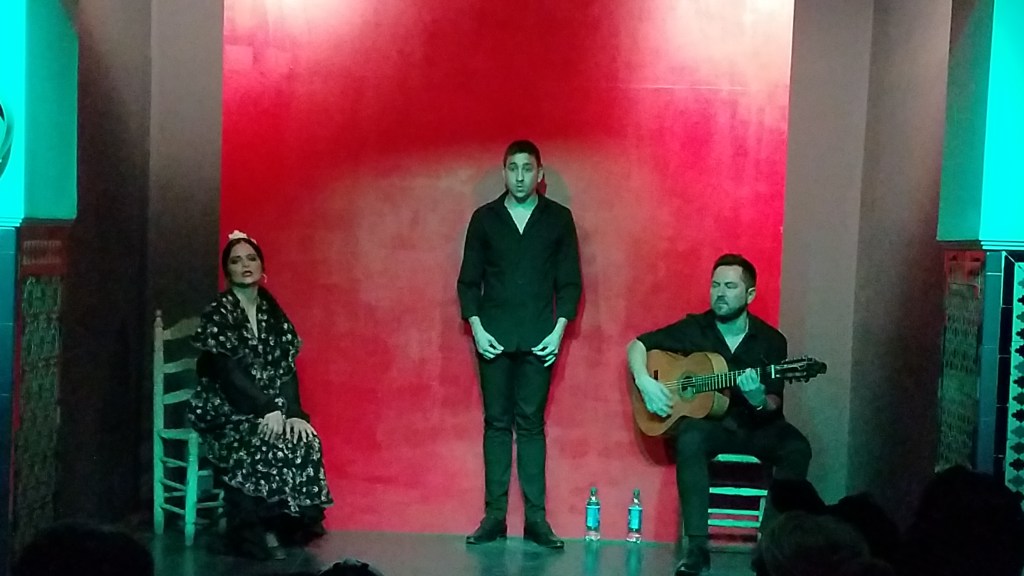

The oldest record of flamenco music dates to 1774 in the book Las Cartas Marruecas (The Moroccan Letters) by José Cadalso. It is believed that the flamenco genre emerged at the end of the 18th century in cities and agrarian towns of Baja Andalusia, highlighting Jerez de la Frontera as the first written vestige of this art. It appeared as a modern art form from the convergence of the urban subaltern groups, Gitano communities, and journeyman of Andalusia that formed the marginalized Flamenco artistic working class who established Flamenco as a singular art form, marked from the beginning by the Gitano brand.
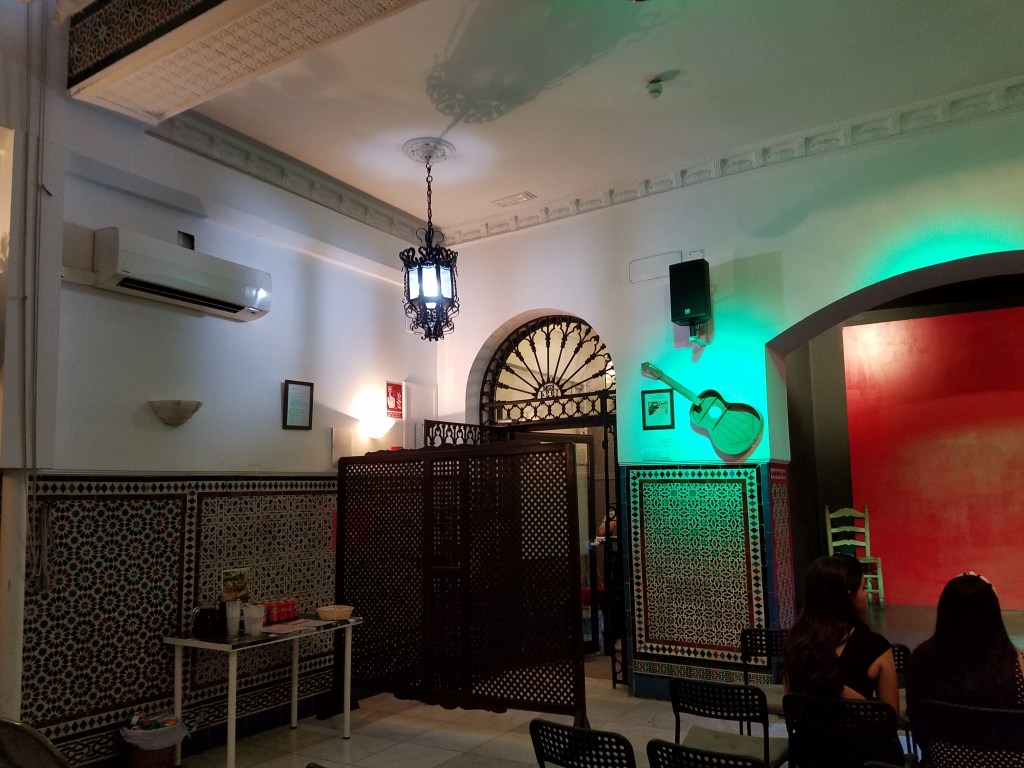
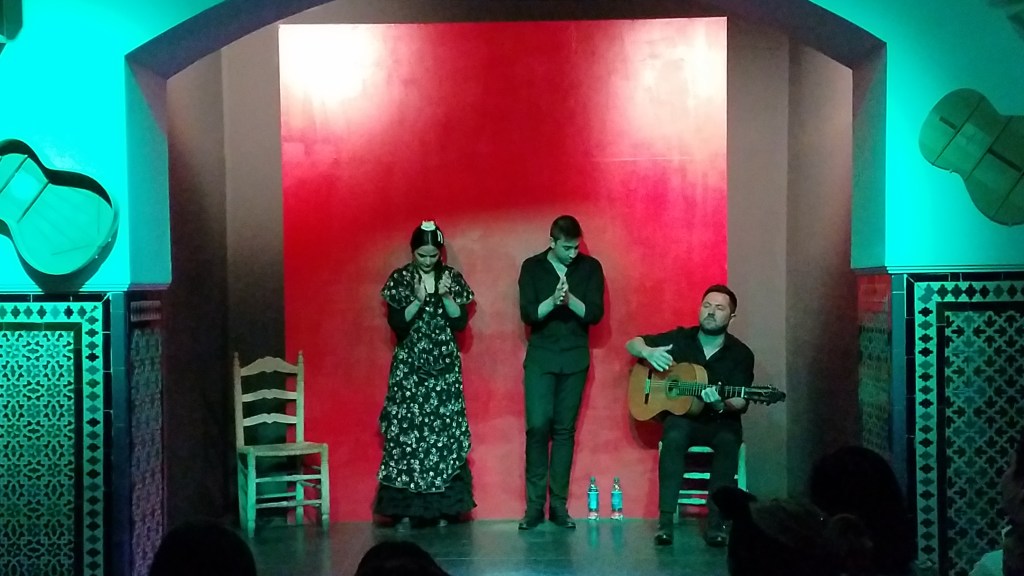

In 1881 Silverio Franconetti opened the first flamenco singer café in Seville. In Silverio’s café the cantaores were in a very competitive environment, which allowed the emergence of the professional cantaor and served as a crucible where flamenco art was configured.
Between the decades of 1920s and early 1960s, flamenco shows began to be held in bullrings and theaters, under the name “flamenco opera”. This denomination was an economic strategy of the promoters, since opera paid much less than the variety shows of the time. At this time, flamenco shows spread throughout Spain and the main cities of the world. The great social and commercial success achieved by flamenco at this time eliminated some of the oldest and most sober styles from the stage, in favor of lighter airs, such as cantiñas, los cantes de ida y vuelta and fandangos, of which many personal versions were created.
Flamenco became one of the symbols of Spanish national identity during the Franco regime, since the regime knew how to appropriate a folklore traditionally associated with Andalusia to promote national unity and attract tourism, constituting what was called national-flamenquismo.
In late 1970s and the 1980s, with the political and social changes in Spain, Flamenco Fusion and ‘New Flamenco’ styles emerged that gain popularity. The strength of Flamenco in Spanish culture is evident with the nomination of a Flamenco fusion song to represent Spain the the 2023 Eurovision contest.
 All Around The World