
The CN Tower is a 553.3 m-high (1,815.3 ft) concrete communications and observation tower in Toronto, Ontario, Canada. Completed in 1976, it is located in downtown Toronto, built on the former Railway Lands. Its name “CN” referred to Canadian National, the railway company that built the tower.
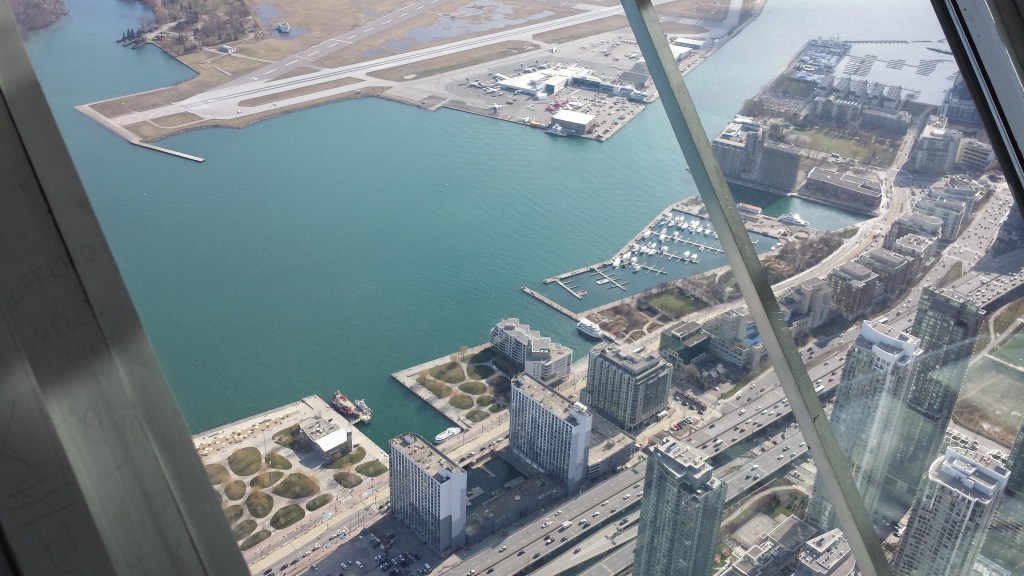
The CN Tower held the record for the world’s tallest free-standing structure for 32 years, from until 2007, when it was surpassed by the Burj Khalifa, and was the world’s tallest tower until 2009 when it was surpassed by the Canton Tower. It is currently the tenth-tallest free-standing structure in the world and remains the tallest free-standing structure on land in the Western Hemisphere. In 1995, the CN Tower was declared one of the modern Seven Wonders of the World by the American Society of Civil Engineers. It also belongs to the World Federation of Great Towers.
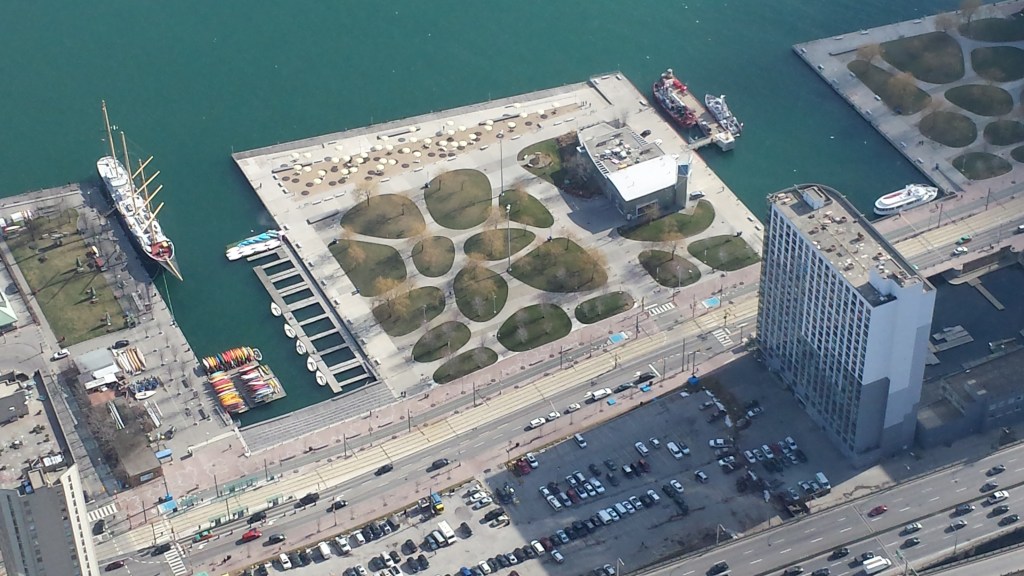
As Toronto grew rapidly during the late 1960s and early 1970s, multiple skyscrapers were constructed in the downtown core, most notably First Canadian Place, which has Bank of Montreal’s head offices. The reflective nature of the new buildings reduced the quality of broadcast signals, requiring new, higher antennas that were at least 300 m (980 ft) tall. The original concept of the CN Tower was first conceived in 1968 when the Canadian National Railway wanted to build a large television and radio communication platform to serve the Toronto area, and to demonstrate the strength of Canadian industry and CN in particular.
At the time, most data communications took place over point-to-point microwave links, whose dish antennas covered the roofs of large buildings. As each new skyscraper was added to the downtown, former line-of-sight links were no longer possible. CN intended to rent “hub” space for microwave links, visible from almost any building in the Toronto area.
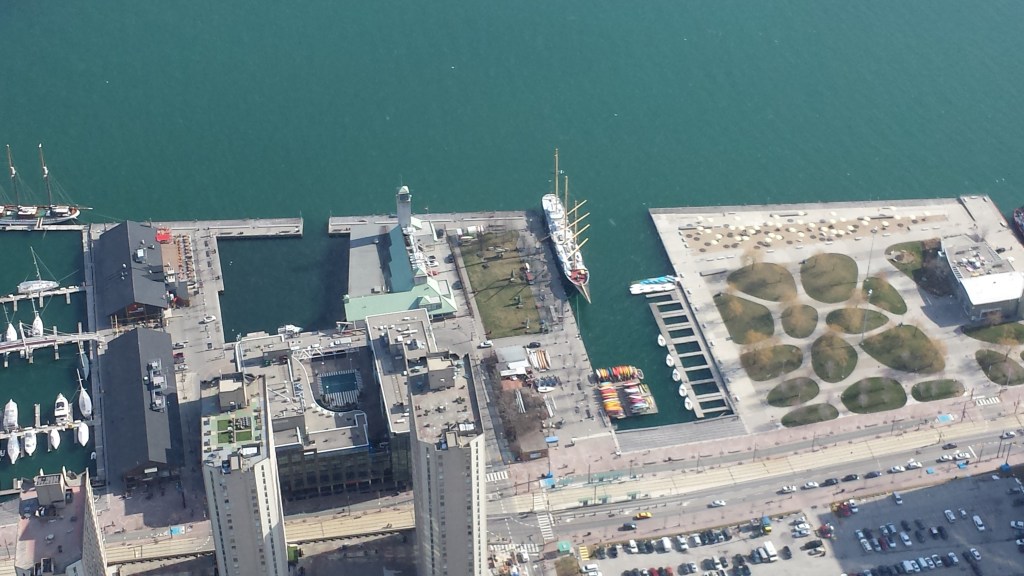
When the CN Tower opened in 1976, there were three public observation points: the SkyPod (then known as the Space Deck) that stands at 447 m (1,467 ft), the Indoor Observation Level (later named Indoor Lookout Level) at 346 m (1,135 ft), and the Outdoor Observation Terrace (at the same level as the Glass Floor) at 342 m (1,122 ft). One floor above the Indoor Observation Level was the Top of Toronto Restaurant, which completed a revolution once every 72 minutes.
The tower would garner worldwide media attention when stuntman Dar Robinson jumped off the CN Tower on two occasions in 1979 and 1980. The first was for a scene from the movie Highpoint. A glass floor at an elevation of 342 m (1,122 ft) was installed in 1994.
On August 1, 2011, the CN Tower opened the EdgeWalk, an amusement in which thrill-seekers can walk on and around the roof of the main pod of the tower at 356 m (1,168.0 ft), which is directly above the 360 Restaurant. It is the world’s highest full-circle, hands-free walk.
The CN Tower has been and continues to be used as a communications tower for a number of different media and by numerous companies till present day.
 All Around The World