
Saint Bavo’s Cathedral is a Roman Catholic cathedral in Ghent, Belgium. The 89-metre-tall (292 ft) Gothic building is named for Saint Bavo of Ghent. It contains the well-known Ghent Altarpiece, also called the Adoration of the Mystic Lamb.

The cathedral stands on the site of the former Chapel of St. John the Baptist, which was primarily of wooden construction and was consecrated in 942 by Transmarus, Bishop of Tournai and Noyon. Construction of the Gothic church began around 1274. In 1539, as a result of the rebellion against Charles V the old Abbey of St. Bavo was dissolved. When the Diocese of Ghent was founded in 1559, the church became its cathedral.

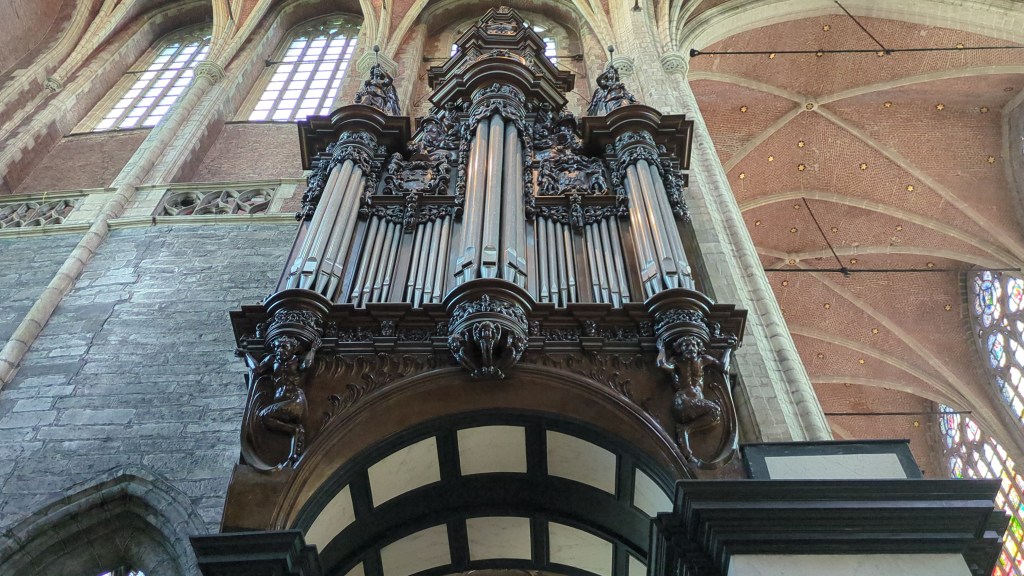
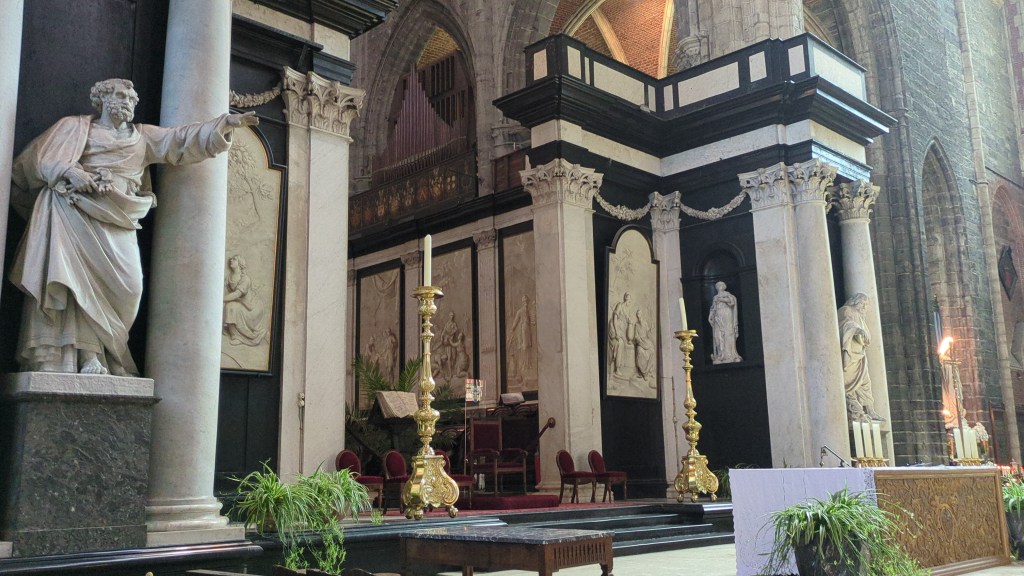
The cathedral has four organs for use at liturgical celebrations. Most famous is the main organ in the upper church, the biggest organ in the Low Countries. In 1935, Mgr Coppieters commanded that the Klais organ from the world exhibition would be put inside the cathedral. The organ case dates from the 18th century and the complete organ has more than 6,000 pipes inside.


The cathedral is home to the works of many notable artists. Most notable of these is the Ghent Altarpiece, formally known as the Adoration of the Mystic Lamb, after its lower centre panel by Hubert and Jan van Eyck. This work is considered Van Eyck’s masterpiece and one of the most important works of the early Northern Renaissance, as well as one of the greatest artistic masterpieces of Belgium.
The Cathedral also holds the painting Saint Bavo enters the Convent at Ghent by Peter Paul Rubens. There are also works by Lucas de Heere. Frans Pourbus the Elder painted 14 panels representing the History of Saint Andrew (1572) and a Triptych of Viglius Aytta (1571). Caspar de Crayer is represented by paintings of St Macarius of Gent, The Beheading of Saint John the Baptist and The Martyrdom of Saint Barbara. The church also holds works by Antoon van den Heuvel including the Christ and the Adulterous Woman and the Resurrection of Christ.
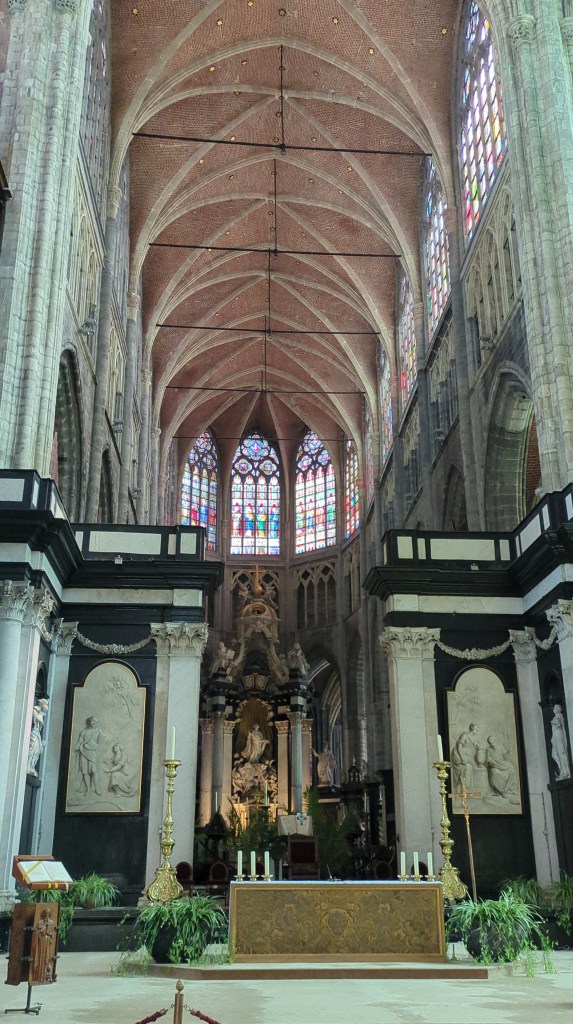
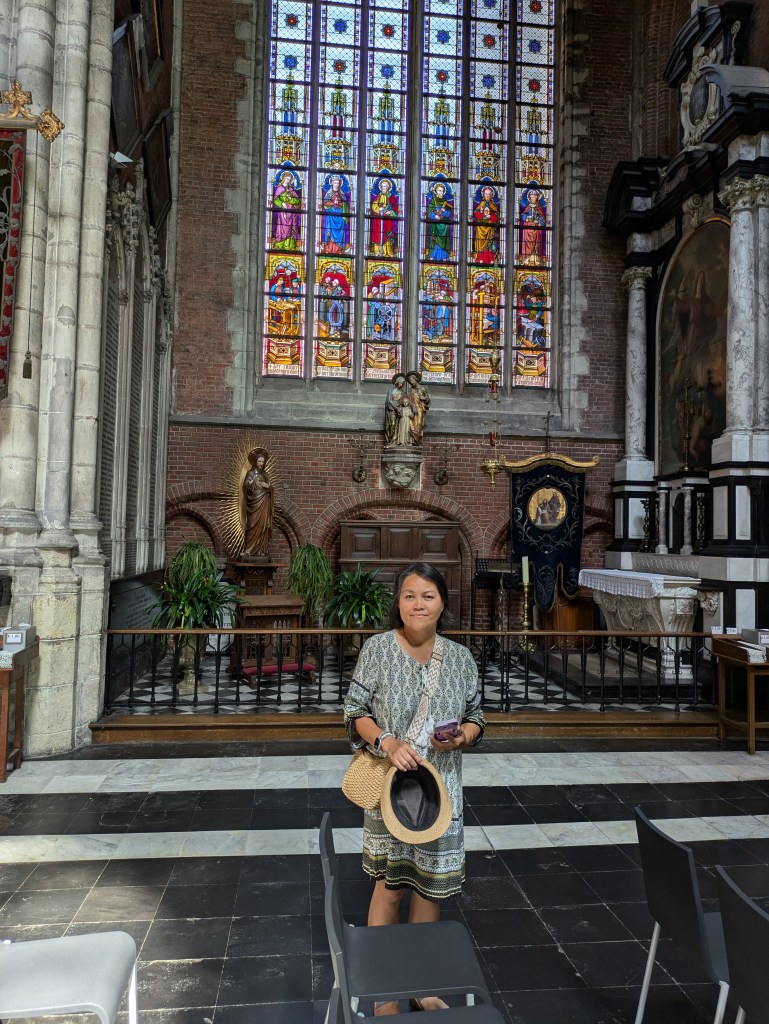
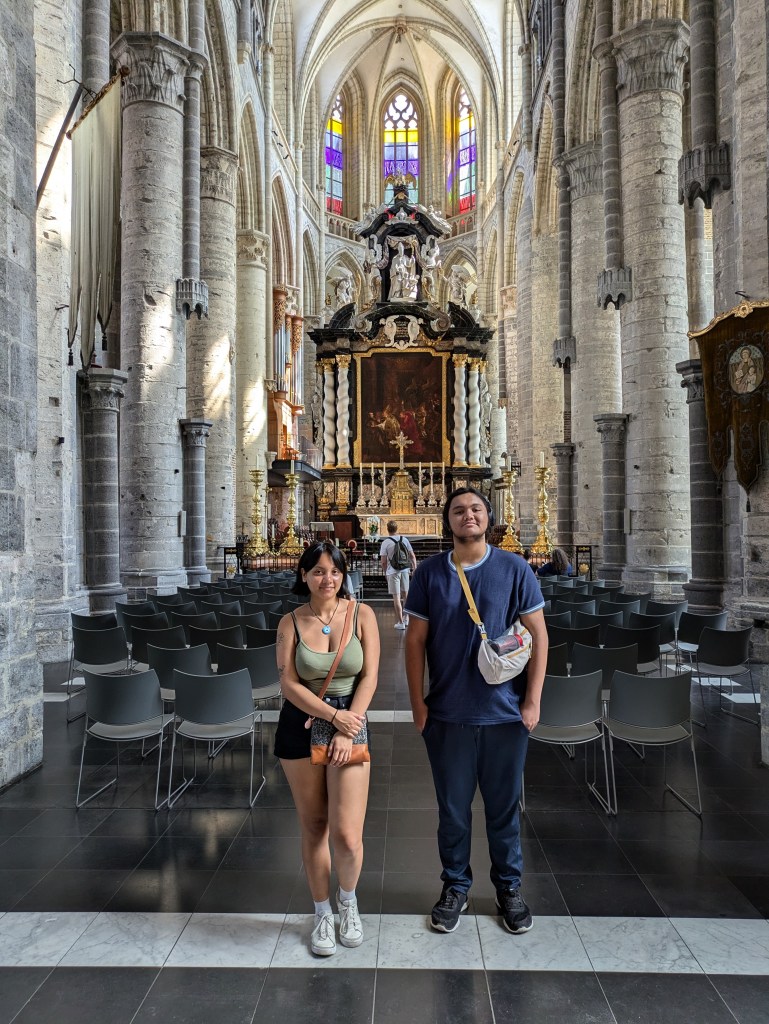
In the Chapel of the Holiest, an important Calvary Triptych is on display. This 15th-century work is attributed to Justus van Gent. Finally, there is a valuable collection of important liturgical plates, reliquaries, and liturgical vessels dating from the 15th century onward. Among the important reliquaries are the head of Saint John the Baptist and of Saint Macarius.

Watch the video clip below for a virtual tour of a walk around Ghent historic city center.
 All Around The World