
Luxembourg City is the capital city of Luxembourg and the country’s largest and most populous commune. Standing at the confluence of the Alzette and Pétrusse rivers in southern Luxembourg, the city lies at the heart of Western Europe within a few hours drive or train ride from Brussels, Paris, Cologne, Amsterdam or Zurich. The city contains Luxembourg Castle, established by the Franks in the Early Middle Ages, around which a settlement developed. Nearly one-third of the country’s population lives in Luxembourg City.

Luxembourg is one of the de facto capitals of the European Union (alongside Brussels, Frankfurt and Strasbourg), as it is the seat of several institutions, agencies and bodies, including the Court of Justice of the European Union, the European Court of Auditors, the Secretariat of the European Parliament, the European Public Prosecutor’s Office, the European Investment Bank, and the European Investment Fund.
The city centre occupies a picturesque site on a salient, perched high on precipitous cliffs that drop into the narrow valleys of the Alzette and Pétrusse rivers, whose confluence is in Luxembourg City. The 70 m (230 ft) deep gorges cut by the rivers are spanned by many bridges and viaducts. Although Luxembourg City is not particularly large (around 20 square miles), its layout is complex, as the city is set on several levels, straddling hills and dropping into the two gorges. It is easily walkable and public transportation like bus and trams are free to the public.
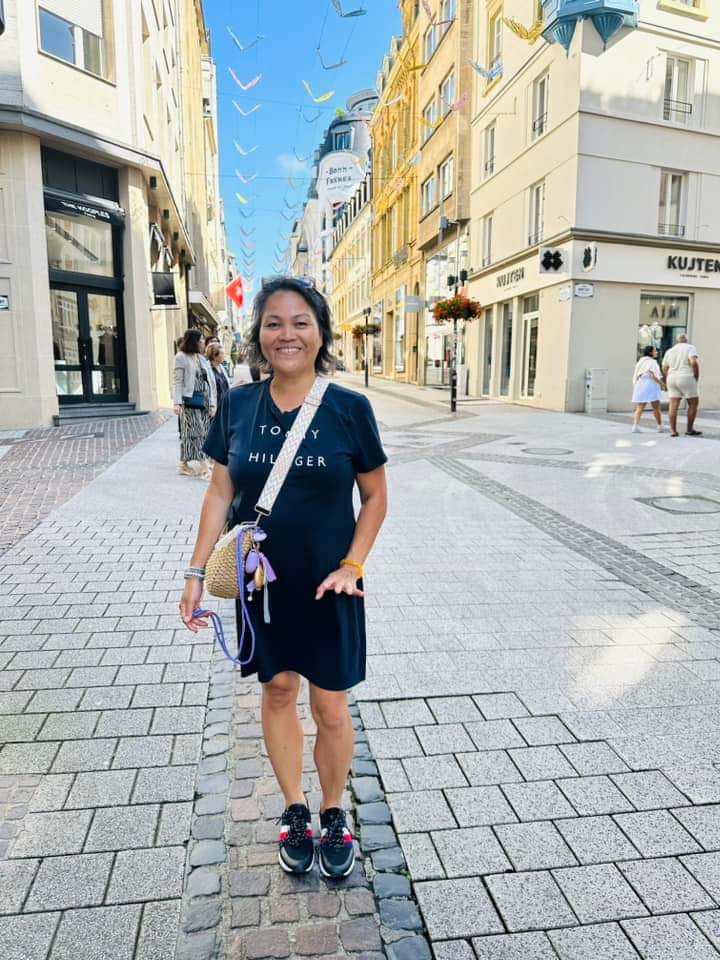
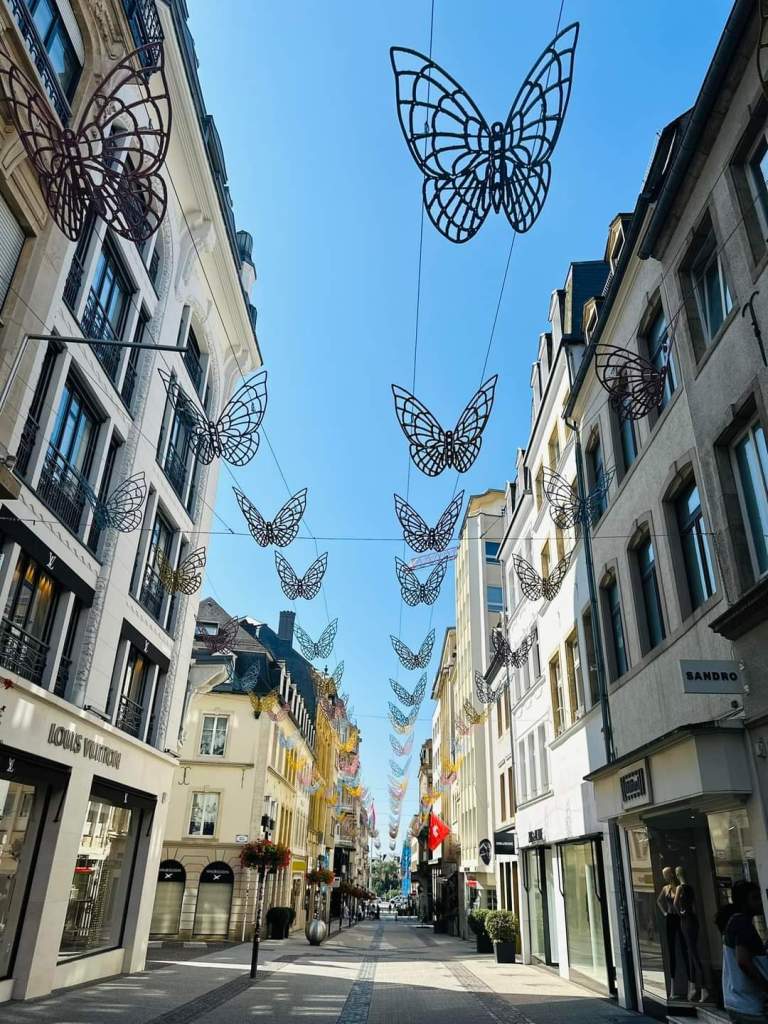
Notable attractions in the city include the Gothic Revival Cathedral of Notre Dame, the fortifications, Am Tunnel (an art gallery underground), the Grand Ducal Palace, the Gëlle Fra war memorial, the casemates, the Neimënster Abbey, the Place d’Armes, the Adolphe Bridge and the city hall. The Second World War Luxembourg American Cemetery and Memorial is located within the city limits of Luxembourg at Hamm. This cemetery is the final resting place of 5,076 American military dead, including General George S. Patton.
Despite the city’s small size, it has several notable museums: the recently renovated National Museum of History and Art (MNHA), the Luxembourg City History Museum, the new Grand Duke Jean Museum of Modern Art (Mudam) and National Museum of Natural History (NMHN). Luxembourg was the first city to be named European Capital of Culture twice. The city of Luxembourg is on the UNESCO World Heritage List as City of Luxembourg: its Old Quarters and Fortifications, on account of the historical importance of its fortifications.


Take a virtual tour of Luxembourg City in the video clip below to learn more.
 All Around The World