
We left Munich in the gentle unraveling of autumn. The fields turned to gold, the sky leaned closer, and every mile south pulled us deeper into color. By the time we reached Mittenwald, the world looked hand-painted: façades brushed with saints and storytellers, vines curling around windows, the scent of pine and varnish in the air. It’s a town that still sounds like wood, the hush of violin-makers, the soft knock of shutters.


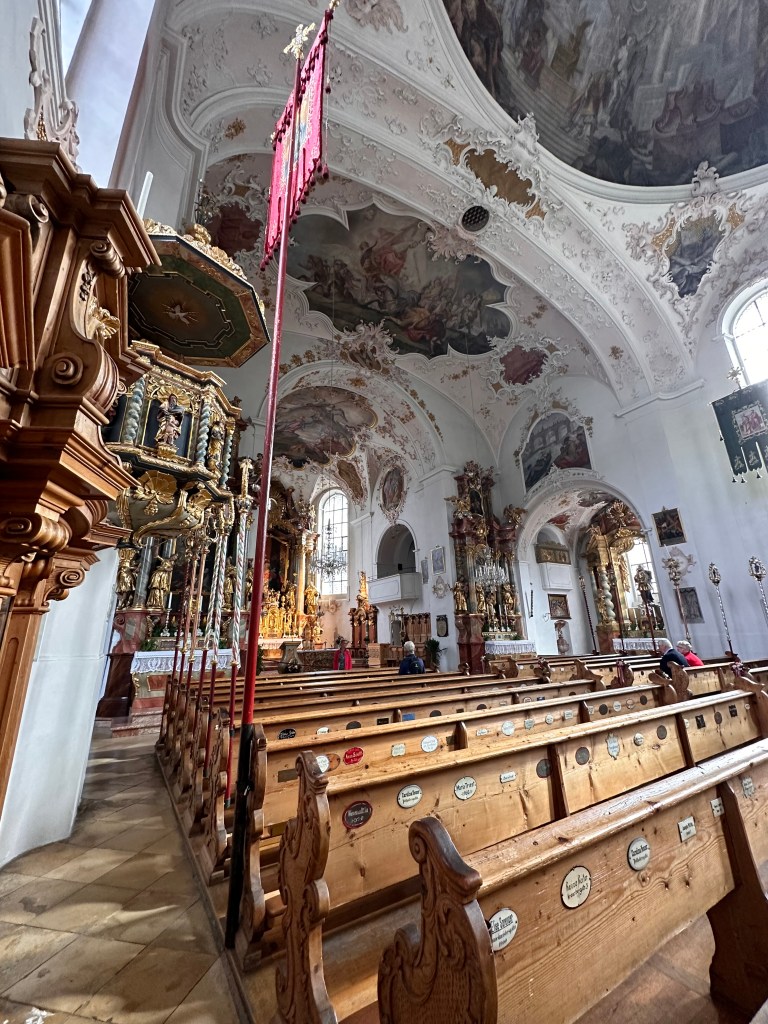
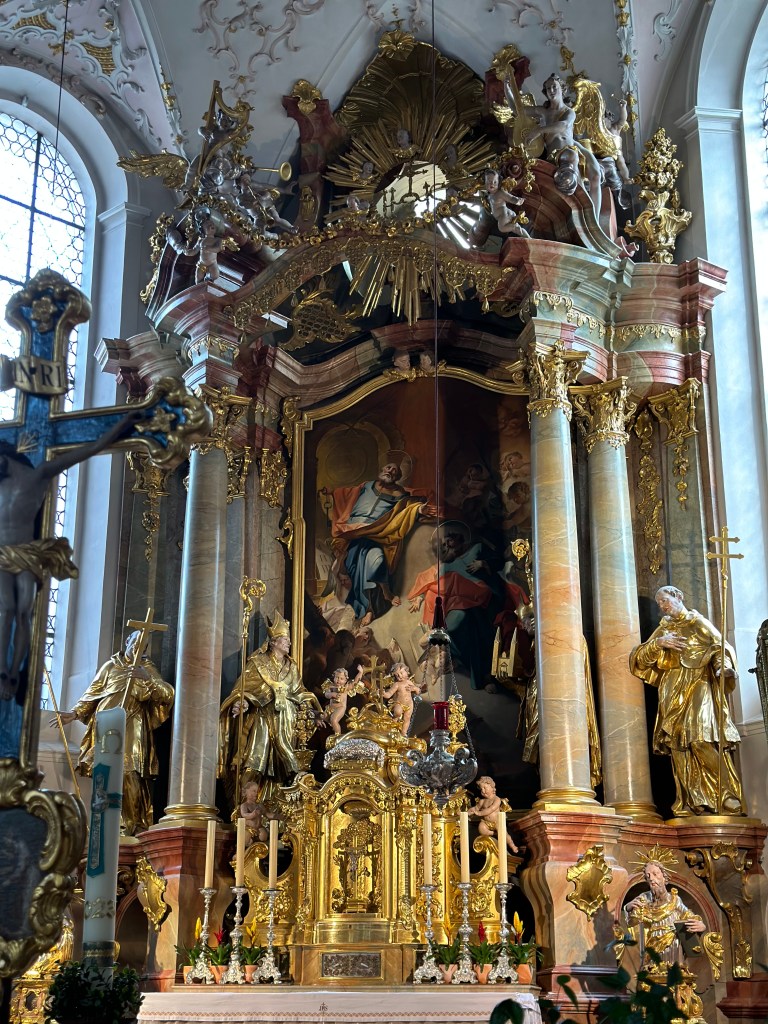
A little further on, Ettal Abbey rose from the valley like a miracle of geometry- white, green, and gold, framed by orange hills. Inside, time dripped slower. The dome shimmered with frescoes, and the scent of wax and incense clung to the silence. It was October, and even the air felt reverent.
By evening, the mountains had gathered around us like company. Oberstaufen appeared just as the light began to thin, a village folded into the Allgäu hills, half mist, half glow. Our stay at the Mondi Resort felt less like checking in and more like finding a pause. The chalets sat among trees turned copper and amber; the sound of cowbells carried faintly from the slopes.

The Lake of Three Nations
Each morning, the fog lifted like a curtain. We’d choose a direction and drive. West led us to Lake Constance– or Bodensee, as the locals say — a mirror shared by Germany, Austria, and Switzerland. The water was steel-blue that week, rippling with wind and the faint scent of wood smoke drifting from vineyards.
Lindau, Germany

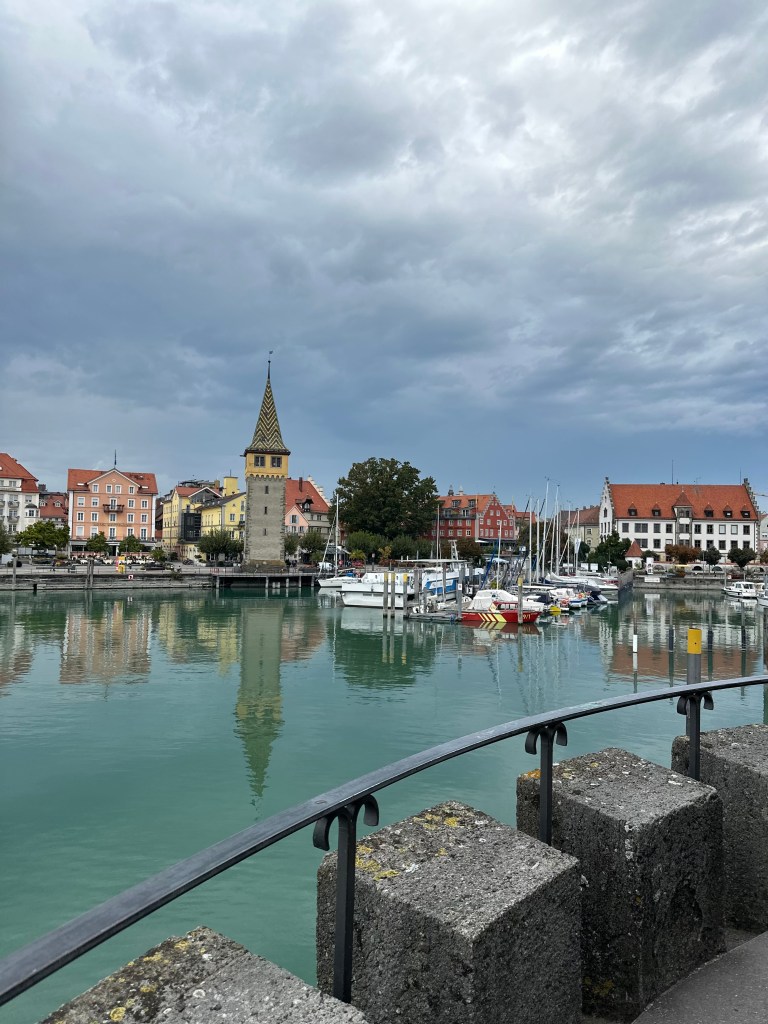

An island dressed for autumn. Narrow cobbled streets, geraniums bowing in the last weeks of bloom, the harbor framed by its stone lion and lighthouse like bookends of history. We wandered through the old town, past patisseries and small shops selling watercolor postcards that looked suspiciously like the view outside. The air was cold enough for gloves, warm enough for laughter.
Bregenz, Austria


Across the border, the architecture sharpened, sleek lines against mountain silhouettes. The Floating Stage stood silent after its summer performances, but the skeleton of the set was still there, immense and surreal against the water. Locals cycled past with scarves flaring, and you could almost hear the echo of opera carried on the wind. The lake was restless, dark, and alive.
St. Gallen, Switzerland

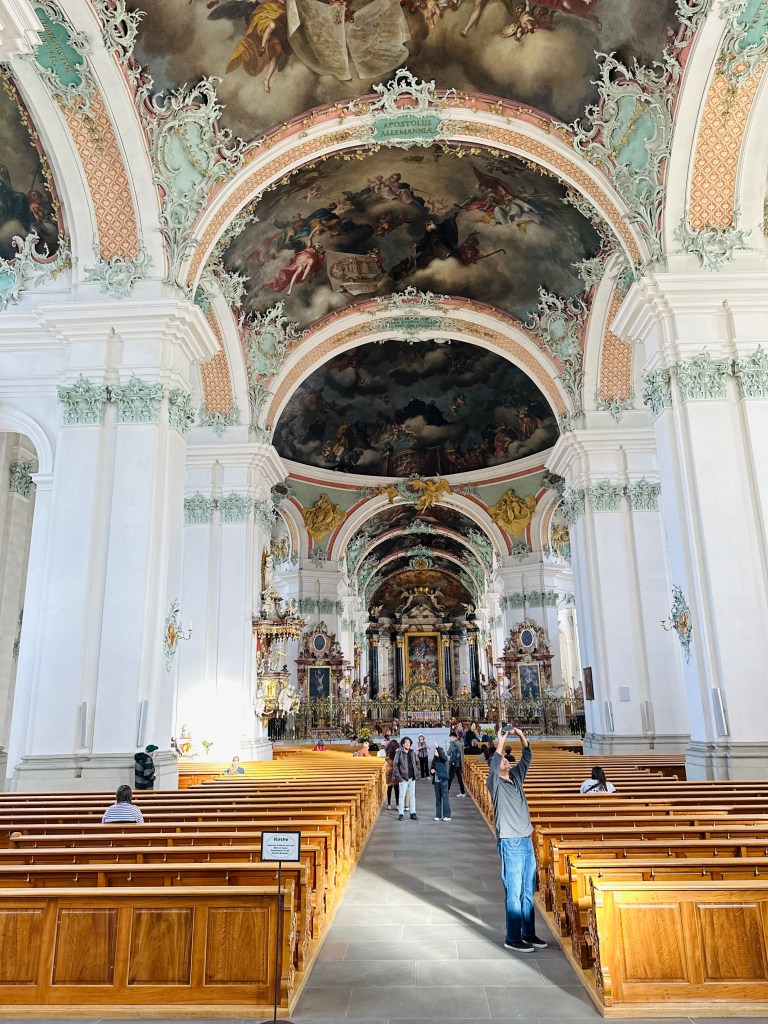

A city wrapped in quiet intelligence. The Abbey Library was the kind of place that teaches you how to breathe slower. Baroque curves, polished wood, manuscripts in glass like sleeping relics. We stood there whispering without meaning to- as if words themselves were guests. Outside, the streets smelled of roasted nuts and rain.
Appenzell, Switzerland
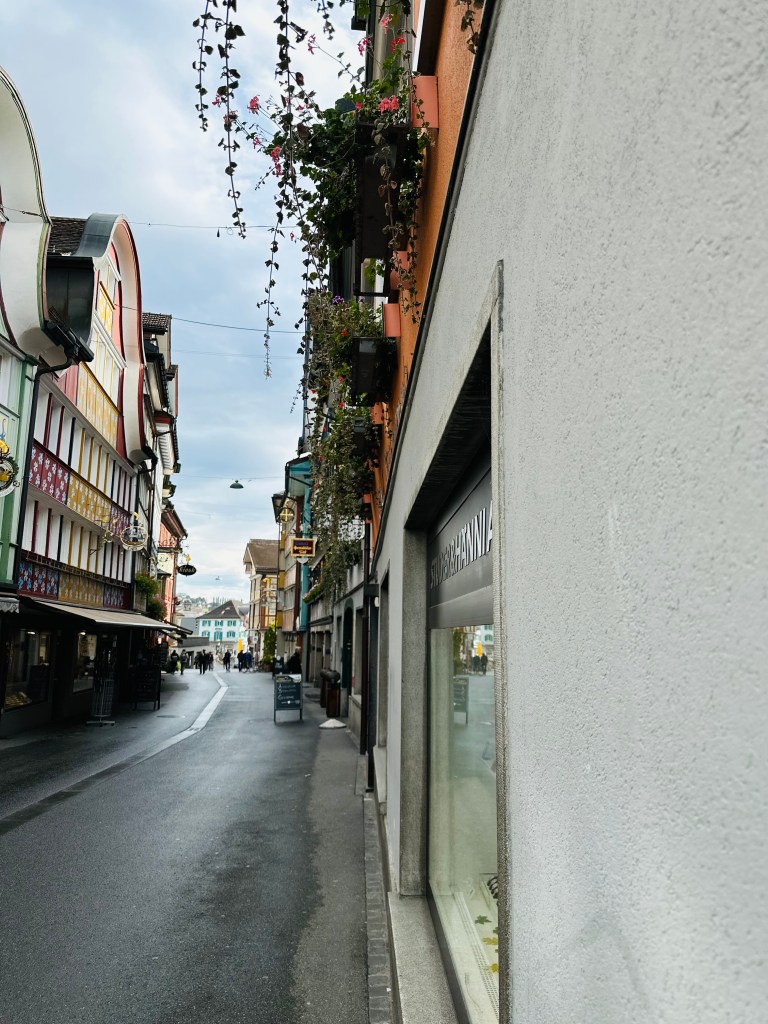

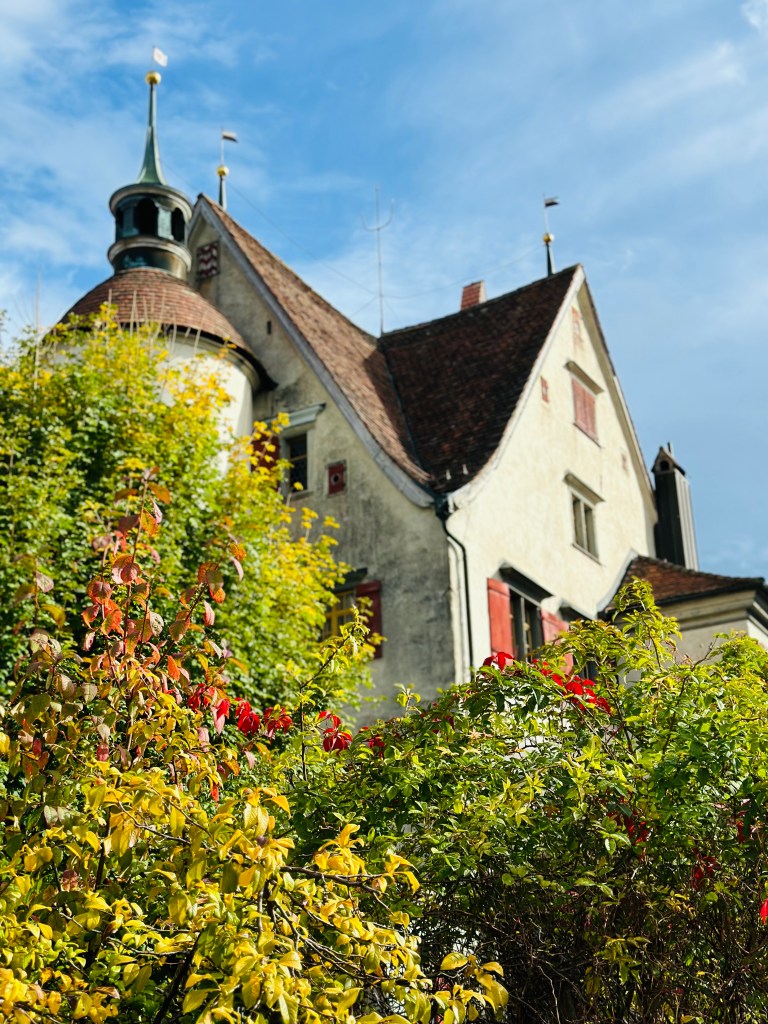
A small miracle of color. Wooden houses painted in cream, sage, and rose; windows bordered in lace. The hills around it were soft and green, like folds of cloth laid over giants. We stopped for coffee and cheese, of course cheese- and watched the locals go about their day in that unhurried way that makes you question your own clock. Autumn suited Appenzell; it carried the season with unselfconscious grace.
Oberstaufen, At Day’s End
Each night we returned to Oberstaufen, where the air smelled faintly of pine and rain. The streets were small, warm, human. There were evenings spent over spaetzle and apple strudel, the kind of meals that hush conversation and stretch time.
Autumn had fully taken the mountains by then- peaks dusted in early snow, valleys burning with gold. The fog came early, the mornings lingered longer. It was the season of slow departures, and somehow every road we drove felt like both arrival and farewell.
We came for the borders- for the novelty of crossing from Germany to Austria to Switzerland in an afternoon.
But what stayed was the in-between: the quiet after the drive, the reflection on the lake, the hum of languages blending softly at dinner tables.
 All Around The World